
Interview contents
IaC with Terraform
Infrastructure as Code (IaC) with Terraform
Cloud infrastructure today is far too complex to manage by hand. Infrastructure as Code (IaC) brings software engineering practices to infrastructure: automation, version control, repeatability, and modular design. Among all IaC tools, Terraform has become the industry standard thanks to its cloud-agnostic design and strong ecosystem.
This guide covers Terraform fundamentals, a practical AWS example, and the interview-ready patterns you’ll need to explain in FAANG interviews or apply in real-world engineering.
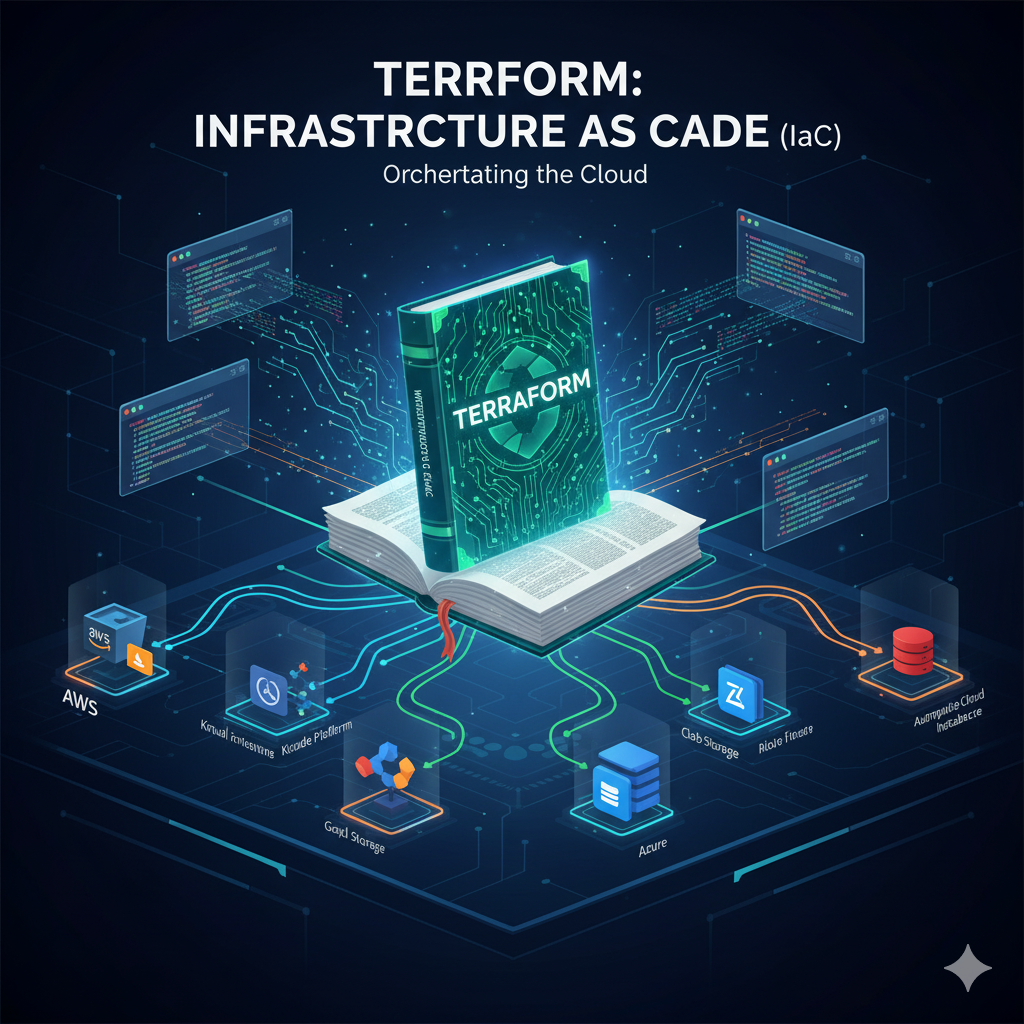
1. Why IaC with Terraform?
- Definition: Manage infrastructure using code instead of manual clicks.
- Benefits: Consistency, repeatability, automation, modularity.
- Alternatives: AWS CloudFormation, Azure ARM templates, Pulumi.
- Why Terraform: Cloud-agnostic, strong ecosystem of providers, open-source, declarative.
2. Core Terraform Concepts
- HCL (HashiCorp Configuration Language): Declarative syntax for resources.
- Providers: Plugins for AWS, GCP, Azure, OCI, Kubernetes, etc.
- State: Tracks the real-world infrastructure (
terraform.tfstate). - Modules: Reusable building blocks for cleaner, DRY infrastructure.
- Workflow:
terraform init— initialize.terraform plan— preview changes.terraform apply— create/update resources.terraform destroy— clean up.
3. Practical Example: AWS VPC + EC2 + S3
A minimal Terraform example to create a VPC, subnet, EC2 instance, and S3 bucket.
provider "aws" {  region = "us-east-1"}
# Variables for customizationvariable "bucket_name" {  type    = string  default = "my-terraform-bucket-example"}
# VPCresource "aws_vpc" "main" {  cidr_block = "10.0.0.0/16"  tags = { Name = "main-vpc" }}
# Subnetresource "aws_subnet" "public" {  vpc_id     = aws_vpc.main.id  cidr_block = "10.0.1.0/24"  tags = { Name = "public-subnet" }}
# EC2 Instanceresource "aws_instance" "web" {  ami           = "ami-0c55b159cbfafe1f0" # Amazon Linux 2  instance_type = "t2.micro"  subnet_id     = aws_subnet.public.id  tags = { Name = "web-server" }}
# S3 Bucketresource "aws_s3_bucket" "data" {  bucket = var.bucket_name  acl    = "private"  tags   = { Name = "data-bucket" }}
# Outputsoutput "instance_ip" {  value = aws_instance.web.public_ip}output "bucket_name" {  value = aws_s3_bucket.data.bucket}
Best practices:
- Store credentials in
~/.aws/credentialsor use IAM roles, never inline. - Split into modules for larger projects (e.g.,
vpc,compute,storage). - Use remote state (e.g., S3 + DynamoDB lock) for teams.
- Add lifecycle rules and tags for cost visibility.
4. Terraform in Distributed Systems
Terraform is used to provision:
- Compute: EC2, GKE nodes, OCI compute.
- Networking: VPCs, load balancers, firewalls.
- Storage: S3, GCS, OCI Object Storage.
- Databases: RDS, Cloud SQL, DynamoDB.
In distributed systems design:
- Use modules for repeatable patterns (e.g., web service stack).
- Environment isolation: dev / stage / prod.
- CI/CD integration: Run
terraform planandterraform applyin pipelines.
5. Common Terraform Patterns
- Modular architecture: Reusable modules for VPC, DB, app clusters.
- Remote state: Store in S3/GCS/Azure Blob with locking.
- Workspaces: Manage environments (dev, staging, prod).
- GitOps workflow: PR → review → pipeline → terraform apply.
- Secrets: Use cloud-native secrets managers, not inline variables.
6. Interview & Real-World Tips
- Know the basics: service mapping (EC2 ⇄ Compute Engine ⇄ OCI Compute).
- Explain scaling: stateless services, autoscaling, LB.
- Discuss security: IAM roles, least privilege, encryption.
- Trade-offs: Manual vs automated, cost vs availability.
- Concrete examples: S3 bucket with lifecycle rules, or Terraform module reuse.
- STAR format: Be ready with one story of IaC automation → cost savings / faster deployment.
Example response:
“I automated VPC + EC2 + S3 provisioning with Terraform, reducing deployment time from 2 days to 30 minutes and cutting costs 15% by adding S3 lifecycle rules.”
7. Final Notes
Terraform + IaC is a must-know skill for interviews and real-world cloud engineering. Master:
- Service mapping (compute, storage, networking).
- Terraform workflow (init, plan, apply).
- Patterns: modular design, state management, remote backends.